Gökhan Kodalak Talks
Spinoza, Affective Architecture, and Flat Ontology
14 Jul 2015, 19:00 – 21:00
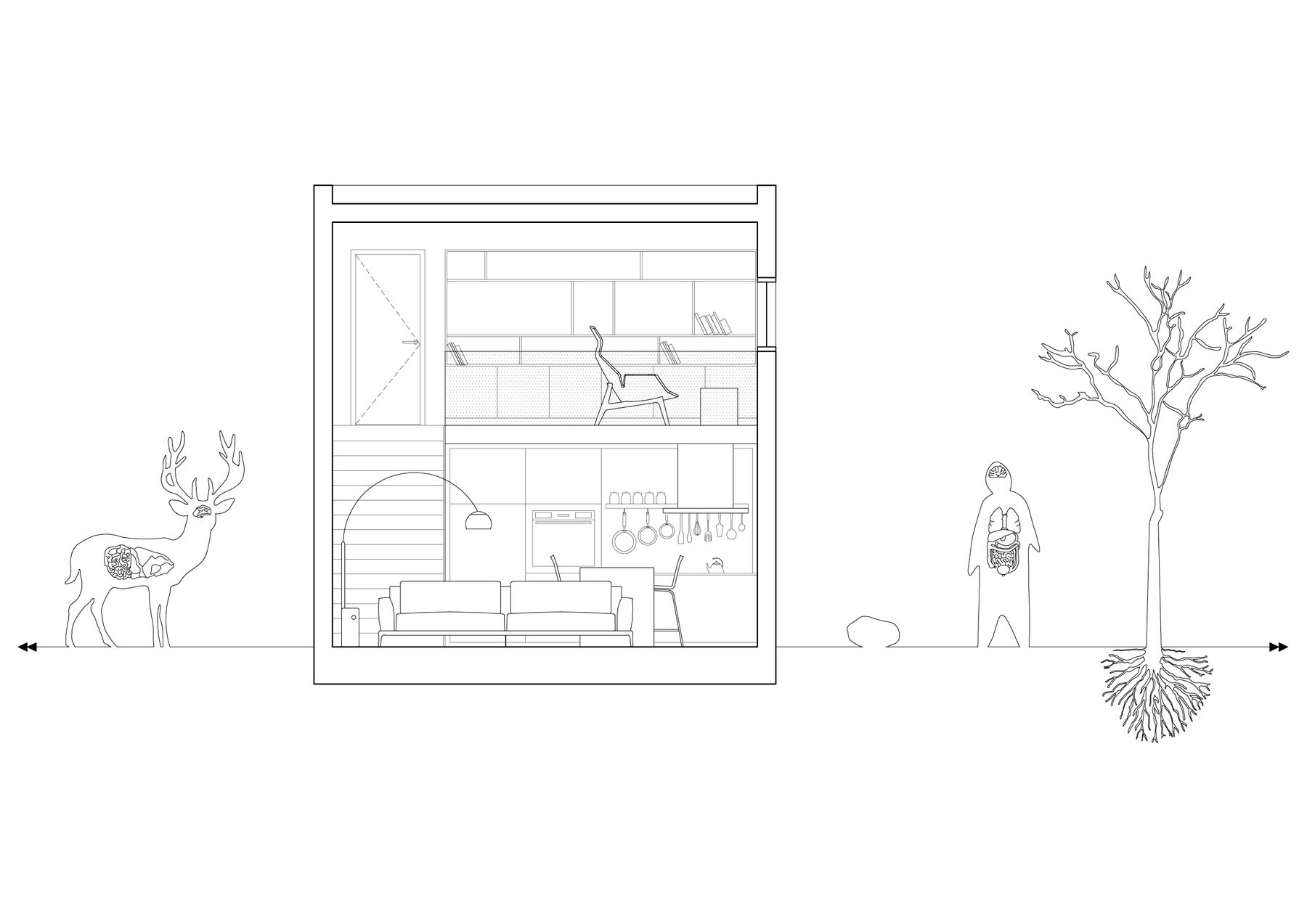
Baruch Spinoza’s philosophy consists of generative concepts persistently expressing architectural and spatial connotations, which, however, have been completely overlooked by the field of architecture. Based on a flat ontology, Spinoza’s philosophy defines all individuals—whether human, animal, building, tree, or stone—as affective interrelated actors in their associated environmental network. This definition has radical implications challenging our anthropocentric exceptionalism, disrupting the assumed bifurcation between culture and nature, and extending affective agency to all social, built, and natural environments without exception. Mediating about Spinoza’s philosophy together with architecture, which deems the built environment even more affective than generally recognized in the architectural discourse, promises a new understanding, before anything else, about architecture’s relationship with itself, with its social actors, and its associated ecology.
Gökhan Kodalak received his bachelor’s degree in architectural design, and master’s degree in architectural theory and history from Yıldız Technical University, Istanbul. As the co-founding partner of ABOUTBLANK, an inter-disciplinary architecture office from Istanbul, he has designed a number of award-winning architectural and urban design projects, exhibitions, and installations. His theoretical articles and ABOUTBLANK’s profile have been published by prestigious journals such as Footprint Delft Architecture Theory Journal, Arredamento Architecture, Architectur Aktuell and A10. In his recent publications and lectures in Istanbul, Aberdeen, Tirana, New York, Skopje, Stockholm and Mardin, he has addressed a wide range of topics including open-source architecture and common space, metropolitan ecology and urban preservation, Spinoza’s flat ontology and affective architecture, and Deleuze’s topological diagram. Since his acceptance to history of architecture and urbanism program at Cornell University in 2012, he has been pursuing his academic and professional life alternating between Istanbul and New York.